Devon Schmitt · 9 October 2026
User Interaction Fluctuations Following Interface Overhauls in Niche Digital Hubs
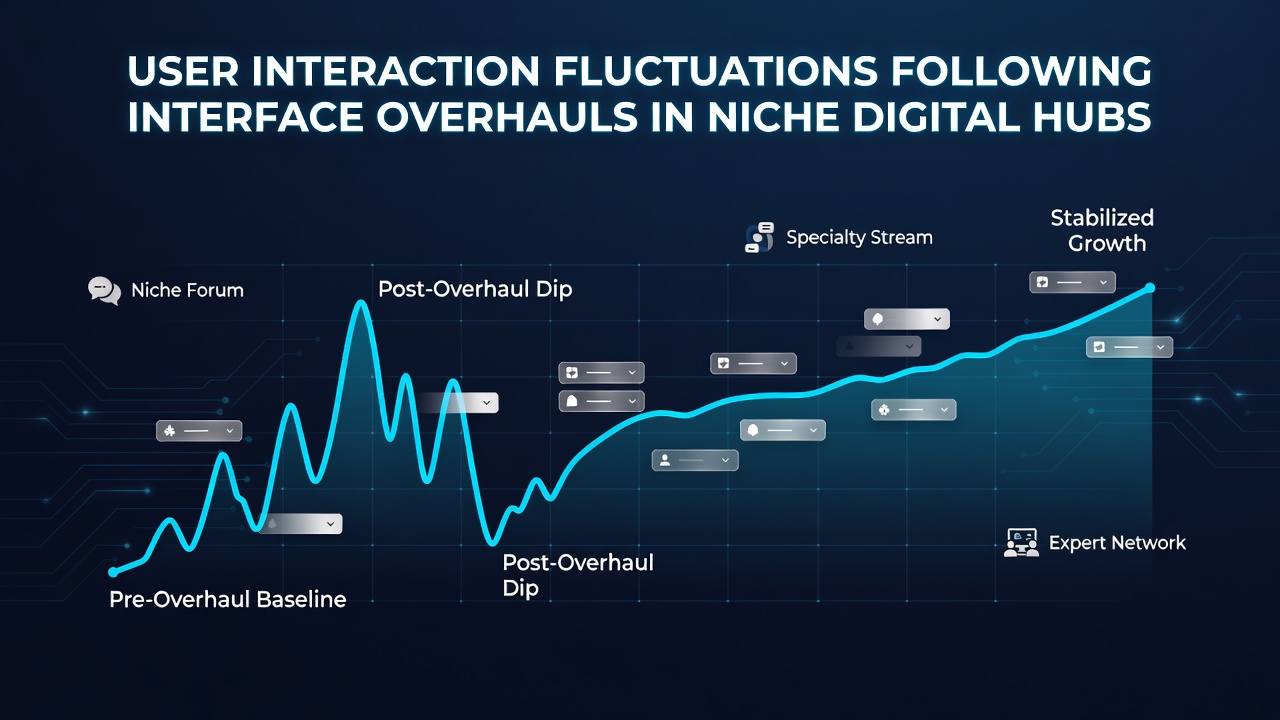
Niche digital hubs such as specialized forums, hobbyist networks, and topic-focused platforms experience distinct shifts in user behavior once interface overhauls take place, and researchers track these patterns through metrics that include post frequency, comment depth, and session duration. Data collected across multiple platforms reveals that initial drops in engagement often occur within the first two weeks after rollout, while recovery trajectories depend on how well the new design aligns with existing community workflows. Observers note that platforms built around narrow interests tend to show sharper fluctuations than general-purpose sites because members develop strong attachments to specific navigation paths and interaction tools.
Patterns Observed in Recent Platform Updates
Studies of several niche communities indicate that navigation menu simplifications frequently reduce the number of daily active threads by 15 to 25 percent in the short term, yet the same changes can increase average time spent per session once users adapt to consolidated sections. Research from the European Commission's digital economy reports shows that color palette adjustments and typography updates produce smaller but measurable effects on click-through rates within threaded discussions. Those who monitor these environments find that search bar repositioning tends to boost content discovery when the feature moves to a persistent header, although the improvement appears only after users complete an initial adjustment period of roughly ten days.
Factors Driving Interaction Changes
Platform operators report that the speed of adaptation correlates directly with the amount of advance notice given to members, and communities that receive interactive tutorials experience faster stabilization of posting volumes. Data shows mobile responsiveness improvements often lift participation from users who access hubs primarily through handheld devices, while desktop-centric redesigns sometimes suppress activity among that same group. A study conducted by researchers at the University of Melbourne found that the introduction of dark mode options in niche creative hubs led to a 12 percent rise in evening-hour logins during the months following deployment. External factors such as concurrent algorithm tweaks on referral platforms can amplify or dampen these internal shifts, creating compound effects that require separate measurement.
Examples from Specific Communities
One photography discussion network underwent a complete sidebar removal and tag system overhaul in early 2025, after which comment volume on new uploads fell by nearly one third before rebounding to previous levels by month three. Another example involves a vintage computing forum that consolidated its resource library into a single searchable index, resulting in a temporary surge of help-request posts as members learned the new structure. Platforms that retained legacy options alongside updated interfaces recorded steadier interaction curves, according to internal analytics shared in industry roundtables. These cases illustrate how the scope of change influences both the depth and duration of fluctuation periods across different interest areas.
Measurement Approaches Used by Analysts
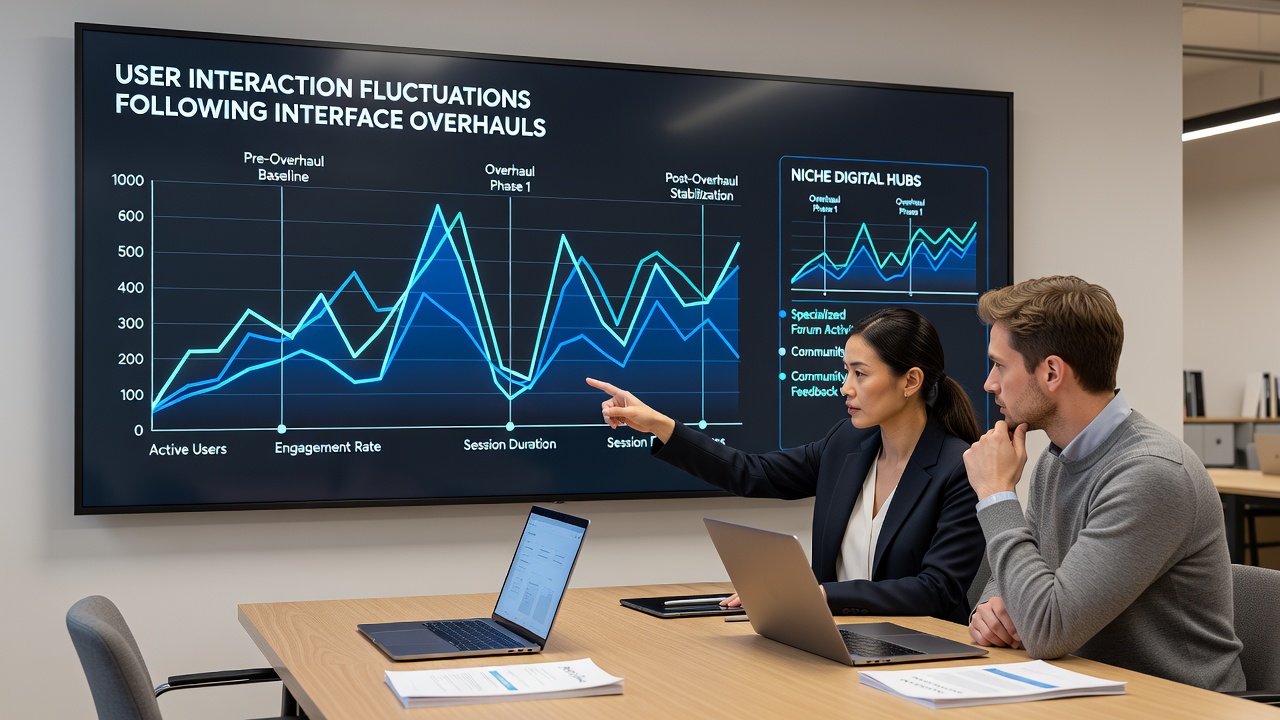
Analysts employ cohort tracking to separate new user behavior from long-term member responses, and this method reveals that established participants often drive the largest initial drops in thread creation. Heatmap tools capture where attention concentrates after layout revisions, showing that previously popular sidebar widgets lose visibility when moved to footer areas. Session replay data provides granular insight into hesitation points during common tasks such as replying or uploading files. Figures from the Canadian Digital Analytics Association indicate that hubs using A/B testing before full rollout achieve 30 percent higher retention of core activity metrics compared with those implementing changes without prior validation.
Developments Noted in October 2026
Platform telemetry gathered during October 2026 highlighted renewed interest in modular interface options that allow communities to toggle certain features on or off, and several hubs reported stabilized interaction rates after introducing such controls. Cross-platform comparisons show that niche sites incorporating user-voted design iterations experienced fewer prolonged dips in discussion volume than those following top-down redesigns. Observers tracking these trends note that seasonal content cycles around holidays can mask or exaggerate overhaul effects, requiring careful baseline adjustments when interpreting monthly statistics.
Conclusion
Interface overhauls in niche digital hubs continue to produce measurable fluctuations in user interactions that vary by change type, preparation level, and community characteristics. Continued monitoring through established analytics practices allows platform teams to identify recovery signals and adjust subsequent updates accordingly, while aggregated findings from multiple regions contribute to broader understanding of digital community dynamics.