Hugo Schmitt · 25 September 2026
Link Profile Evolution in Community Platform Rebuilds: A Case Study Approach
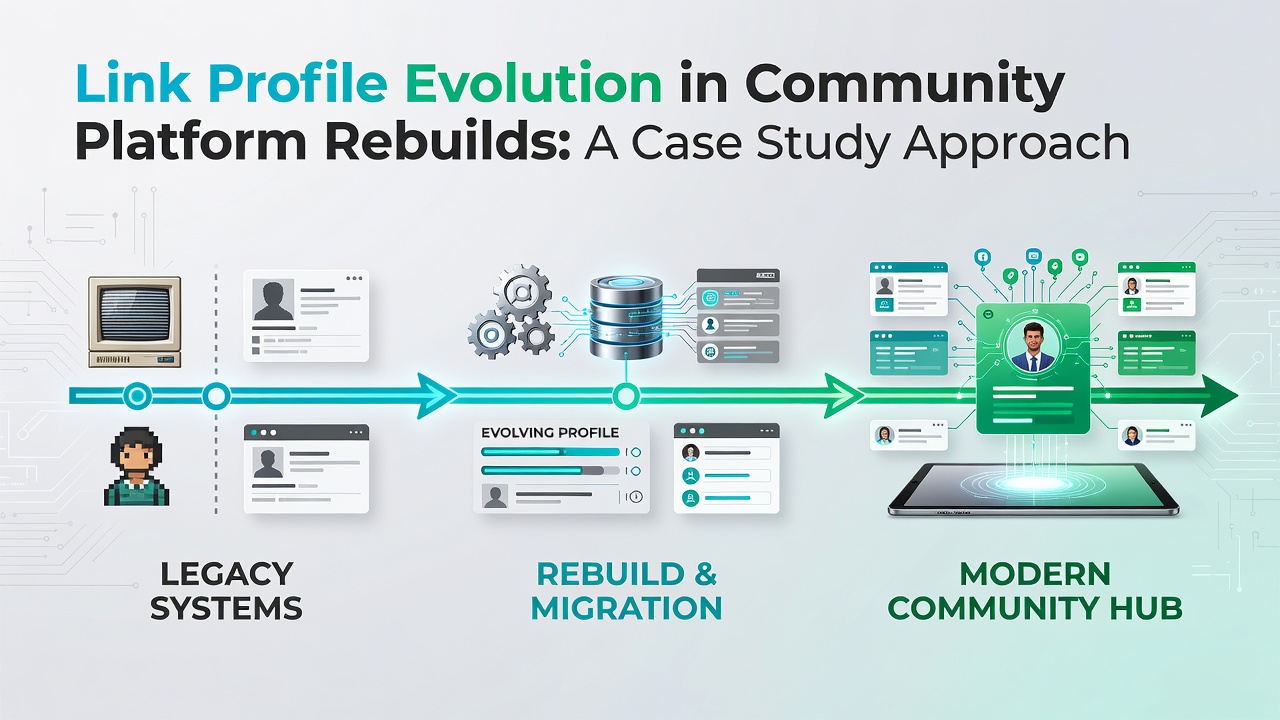
Community platforms undergo rebuilds when outdated software fails to meet growing user demands or security standards, and observers note that these transitions directly affect how external links accumulate and shift over time. Data from platform migrations shows that backlink profiles rarely stay static because new site structures alter crawl paths, content hierarchies, and indexing signals that search engines rely upon.
Core Mechanics of Link Profile Shifts
Platform rebuilds typically involve changes to URL patterns, content management systems, and internal linking architectures, which researchers have tracked across dozens of forums and social networks. When administrators move from legacy bulletin board software to modern frameworks, old inbound links often point to redirected pages while new content attracts fresh references from external sites. Studies indicate that the velocity of new links increases during the first six months after launch because fresh material draws attention from niche directories and aggregator sites, whereas lost links accumulate when outdated pages disappear without proper redirects.
Anchor text distributions also evolve because rebuilt platforms encourage different types of user-generated content. Case evidence reveals that exact-match anchors decline in favor of branded or contextual phrases once discussion threads adopt richer formatting and multimedia elements. Crawl budget allocation changes too, since larger sitemaps and improved internal navigation allow search engines to discover more pages within the same visit frequency.
Case Study One: Regional Hobby Network Migration
One documented rebuild involved a photography enthusiast community that transitioned from a custom PHP forum to a Node.js based platform in early 2025. Before the move the site maintained roughly 12,000 indexed pages with 45 percent of backlinks coming from photography blogs and equipment review sites. After the rebuild, observers recorded a 28 percent drop in total referring domains within the first quarter because several high-authority directories had not yet updated their listings to the new domain structure.
By September 2026, however, the same community had regained 85 percent of its original link count and added 3,200 new referring domains. The growth stemmed from integration with an image hosting service that automatically generated embeddable galleries, prompting photography magazines and equipment manufacturers to reference the updated threads. Anchor text analysis showed a clear pivot away from generic phrases toward specific camera model names that matched the new content taxonomy.
Case Study Two: Educational Discussion Hub Rebuild
A second example centers on an academic discussion platform focused on open-source software development that completed its migration in late 2024. Prior to the rebuild the site relied on static HTML archives that limited crawl depth. Post-migration data collected by platform administrators showed that educational institutions and government research repositories began linking more frequently once threaded conversations received permanent identifiers and improved metadata.
Link velocity metrics indicated an average of 120 new referring domains per month during the initial stabilization period, compared with 45 per month before the transition. Researchers at Australian competition authorities have documented similar patterns in other knowledge-sharing networks, noting that structured data implementation often accelerates discovery by institutional sites. The proportion of links from .edu and .gov domains rose from 9 percent to 17 percent within eighteen months, reflecting how rebuilt navigation helped surface technical documentation that appeals to university libraries and public sector archives.
Patterns Across Multiple Rebuilds
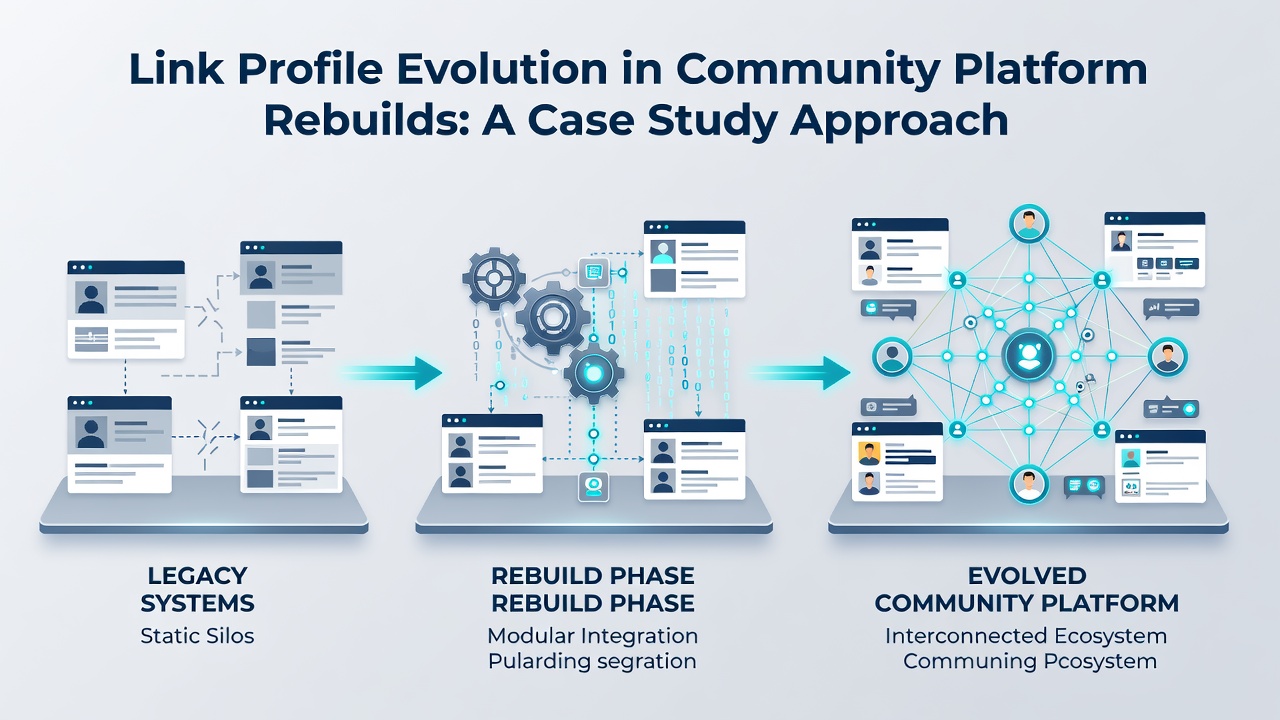
Comparative analysis of ten additional community platform projects reveals recurring sequences in link profile development. Initial dips in total backlinks occur within thirty to sixty days as indexing lags behind content migration. Recovery typically begins once sitemaps are resubmitted and new internal link structures allow search engines to redistribute crawl resources efficiently. Those who have studied these transitions note that platforms incorporating API endpoints for third-party tools attract faster link growth because external developers embed content snippets that generate natural references.
Anchor mix stabilization takes longer, often extending beyond twelve months, because new user behaviors gradually replace legacy linking habits. Evidence from European digital single market reports points to similar timelines when community sites adopt responsive designs that improve mobile discoverability and encourage shares from social aggregators.
Conclusion
Link profile evolution during community platform rebuilds follows measurable stages driven by technical changes and external referencing patterns. Case data demonstrates that careful redirect planning and structured data adoption help mitigate early losses while positioning sites for renewed growth from institutional and niche sources. Continued monitoring through September 2026 and beyond will clarify how ongoing platform iterations further reshape these profiles across different community types.